
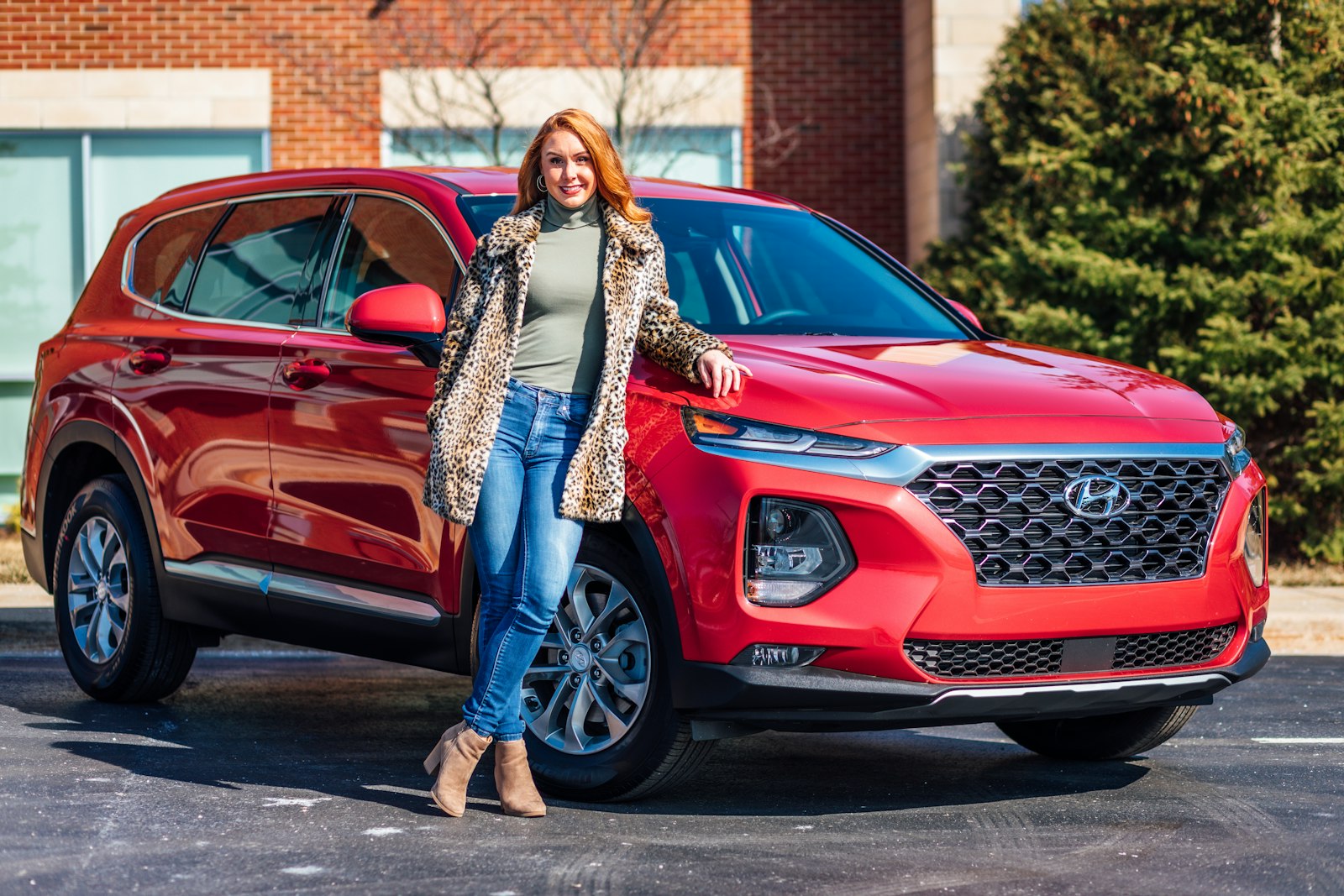
Every year I get a stack of midsize sedans through the driveway and every year fewer people seem to want them. So I want to be clear about what this review is and is not. It is not an argument that you should buy a sedan instead of an SUV — you have already decided that or you have not. It is a week-long account of living with a 2026 Honda Accord Hybrid in Touring trim, daily, the way you would, and a report on whether it earns its keep. It does. Spectacularly, in a couple of areas, and with a couple of irritations I want you to know about before you sign anything.
The car was the top Touring trim, which means the 204-horsepower two-motor hybrid system, 19-inch wheels, leather, a head-up display, and the 12.3-inch touchscreen with the built-in Google stuff. Over seven days I put 540 miles on it: a daily commute across Austin, one longer run down to San Antonio and back, two grocery hauls, and an airport pickup at 6 a.m. that involved the kind of cold-start cabin behavior I always pay attention to.
Observed fuel economy versus the sticker
This is the headline, so I will lead with it. The EPA rates the Accord Hybrid Touring at 44 city, 41 highway, 43 combined — the Touring's bigger 19-inch wheels cost it a couple of mpg versus the lighter Sport and EX-L hybrids, which are rated at 51 city. Over my 540 mixed miles, the trip computer read 46.8 mpg, and when I filled it at the same pump I started from, my hand calculation came out to 45.9.
Read that again. I beat the combined EPA number by nearly three miles per gallon in real driving, in a Texas May, with the air conditioning running essentially the entire week. That basically never happens. The reason is that Honda's two-motor hybrid is at its best exactly where I spend most of my time — stop-and-go town driving, where the system runs on the electric motor far more than you would expect and the gas engine mostly acts as a generator. On the open run to San Antonio at a steady 72 mph the figure dropped into the low 40s, right on the highway estimate, because at sustained highway speed the gas engine has to do the work directly. But the blended week landed well north of the sticker, and I have the pump receipt.
For context, my long-running spreadsheet of observed-versus-EPA has the Accord Hybrid as one of maybe a dozen cars in twelve years that have beaten their combined number in my hands. Most cars fall 5 to 15 percent short. This one came in over. That is a real, bankable advantage if your driving skews urban.
Living with it: the good
The seats are the quiet star. I did the San Antonio round trip — about three and a half hours of seat time in a day — and got out without the lower-back complaint I log for so many cars. The Touring's seats have proper bolstering and a cushion long enough to support tall legs. The driving position is low and natural in a way crossovers cannot replicate, and the outward visibility is excellent because you are not perched up high looking over a tall hood.
The cabin is genuinely quiet. Honda has put real money into sound deadening and acoustic glass on the Touring, and at a 70-mph cruise the loudest thing is faint tire roar on coarse Texas concrete. The ride is supple without being floaty, even on the 19s, which surprised me — I expected the big wheels to ruin it the way they do on a lot of cars, and they did not.
Trunk space is enormous and, crucially, usable, because the hybrid battery lives under the rear seat rather than eating the cargo floor. I loaded a full week of groceries plus two carry-on bags for the airport run and never came close to filling it. The rear seat folds, the opening is wide, and the load floor is flat.
Living with it: the infotainment quirks
Now the irritations, because there are some, and they are all in the screen. The Touring trim uses Honda's Google-built infotainment, with Google Maps and the Assistant baked in. When it works it is excellent — Maps as your native nav with live traffic is genuinely better than most factory systems, and it is the system I would pick if forced. But.
On the 6 a.m. airport run, with the cabin at about 48 degrees — cold for Austin even in May — the system took noticeably longer than I would like to fully wake up. The backup camera came up fast, to its credit, but wireless Android Auto did not connect until I was already at the end of my street, and on one of the seven mornings it failed to connect at all until I restarted Bluetooth manually. Wireless phone projection is the single most common cold-morning failure point I see across the whole industry right now, and the Accord is not immune. If you live somewhere genuinely cold, budget for a few seconds of patience or just plug in with a cable, which connected instantly every time.
The second quirk is smaller: too many functions live behind the touchscreen. The climate controls thankfully keep physical knobs and buttons, which I will always praise, but the heated-seat and ventilated-seat toggles are a screen tap away, and on a cold morning I want a physical button for that. Honda is better than most here, but it is not perfect.
Who is this car actually for
Here is where I earn my paycheck. The Accord Hybrid is for the person who has talked themselves into needing an SUV and does not actually need one. If you are not regularly hauling more than four people or large cargo, and you do not drive on snow or trails, you are giving up almost nothing by choosing this sedan, and you are gaining a quieter cabin, a better ride, a lower and more comfortable driving position, real-world fuel economy in the mid-40s, and a trunk that holds more than you think.
It is for the commuter whose miles are mostly urban, because that is exactly where the hybrid system beats its own sticker. It is for the person who values long-haul seat comfort, because these are among the best seats in the class. And it is for the buyer who wants Honda's long-term reliability reputation without paying for a flagship badge.
Who should skip it? Anyone who genuinely needs all-wheel drive — the Accord does not offer it, and that is the single biggest reason to walk to a CR-V Hybrid or a competitor instead. Anyone who needs a third row, obviously. And anyone who simply prefers the high seating position of a crossover, because no spec-sheet argument will change how you feel sitting in the thing.
I would buy the EX-L hybrid over this Touring, frankly — you keep the excellent powertrain and most of the comfort, gain back the couple of mpg the big wheels cost, and save real money. But in any trim, the 2026 Accord Hybrid is the adult in a room full of crossovers, and after a week and 540 honest miles, it remains one of the easiest cars in the segment to recommend.