
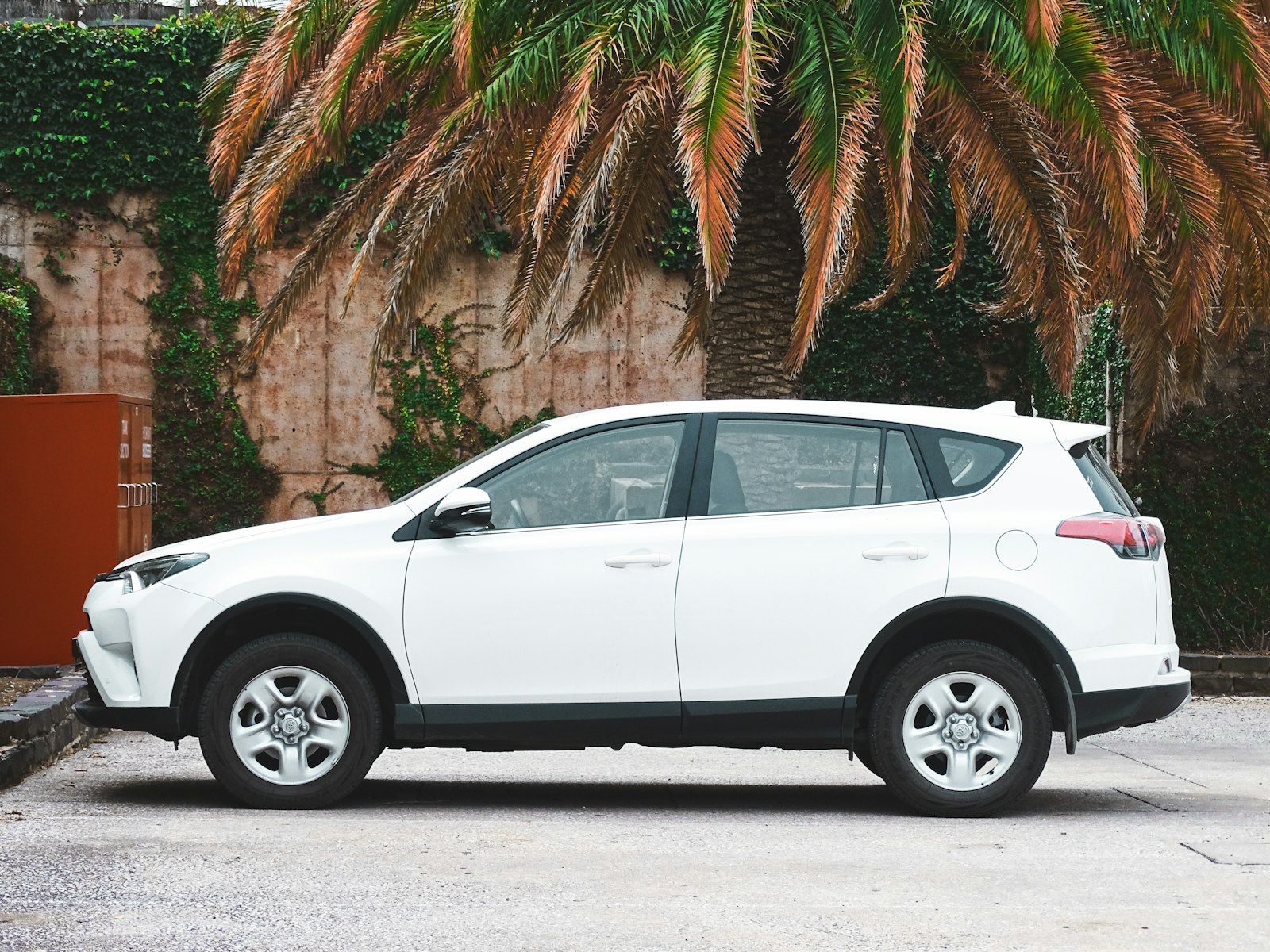
In the finance office I watched the lease-versus-buy decision get made on emotion almost every time. People who should have leased bought, people who should have bought leased, and the store made money on the confusion either way. Let me strip the feelings out. Whether you lease or finance is just a question of what you're paying for and how long you keep it — and then a question of avoiding four specific traps that live inside both deals.
What you're actually paying for
When you finance, you borrow the full price of the car and pay it off over the term. At the end you own an asset — a used car with real resale value. When you lease, you only pay for the portion of the car you use up: the difference between its price today and its predicted value at lease-end (the residual), plus rent on the money in between. You pay for depreciation, not the whole car. That's why lease payments are lower. You're renting the steepest part of a car's depreciation curve and handing it back before you'd have to absorb the rest.
This single distinction tells you most of what you need. Lease payments are lower month to month, but you own nothing at the end and the meter restarts. Financing costs more monthly but builds equity, and once the loan is paid off you get years of payment-free driving. Over a 12-year ownership horizon, buying and keeping a car almost always wins on total cost. Over a perpetual three-year-replacement cycle, leasing is usually cheaper per month for the same car — you just never stop paying.
The lease math, with real numbers
Say a $40,000 crossover with a 36-month, 60% residual. The residual value is $24,000, so you're paying for $16,000 of depreciation across 36 months — about $444 a month before the rent charge. The rent charge comes from the money factor. A money factor of 0.00208 multiplied by 2,400 equals roughly 5% APR equivalent. Apply that to the average of the cap cost and residual and you add maybe $130 a month, landing you near $574 plus tax. Drop the negotiated price by $2,000 and both the depreciation and the rent shrink — which is exactly why you negotiate the selling price (the cap cost) on a lease just as hard as on a purchase. Salespeople love to imply lease prices are fixed. They are not. The cap cost is negotiable; insist on it.
Trap 1: the money-factor markup
This is the lease equivalent of interest-rate markup, and it's the most lucrative trap in the building because almost no one checks it. The manufacturer's captive lender sets a buy rate money factor. The dealer is allowed to mark it up — often by 0.0004 or more — and pocket the difference over the life of the lease. On a $40,000 lease, a 0.0004 markup is roughly an extra $1,000 you'll never see itemized, because money factor doesn't appear on the advertised payment. Ask directly: "What is the base money factor from the captive lender, and what are you marking it up to?" If they won't tell you the buy rate, that's your answer about what's happening. Look up the current base money factor for your vehicle before you go.
Trap 2: acquisition and disposition fees
Two fees that exist only on leases and that buyers routinely forget to count. The acquisition fee (also called a bank fee) runs roughly $595 to $895 and is charged by the lender to originate the lease — it's often baked into the cap cost so you finance it and pay rent on it, which is worse than paying it upfront. The disposition fee, typically $350 to $495, is charged at lease-end when you return the car. So your "$299 a month" lease has close to $1,000 of fees bracketing it. Neither is highly negotiable, but you must include them when you compare a lease to a purchase, or you're comparing the wrong numbers. And know the disposition fee is often waived if you lease or buy another car from the same brand at turn-in — which is precisely how leasing keeps you on the treadmill.
Trap 3: the negative-equity rollover
This is the one that quietly wrecks people's finances, and it happens on the finance side. You owe $28,000 on a car worth $22,000 — you're $6,000 "upside down," common when you financed for 72 or 84 months and put little down. You want a new car, and the dealer cheerfully says no problem, we'll just roll it in. That $6,000 gets added to the loan on your next car. Now you're financing $46,000 on a $40,000 vehicle, instantly upside down on day one, and the cycle compounds. With 84-month loans now common in 2026, I see buyers who are three cars deep into rolled-over negative equity and have no idea how they got there.
The defenses: put real money down (or buy a car whose value holds), keep loan terms to 60 months or less even though it raises the payment, and never roll negative equity into a new loan to escape a car you simply got tired of. If you're upside down, the cheapest move is almost always to keep driving the car until the loan catches up to the value. Gap insurance covers you if the car is totaled while upside down — worth having on any long-term loan — but it does nothing for the voluntary trade-in trap.
Trap 4: the term-stretch payment illusion
This one spans both lease and finance, and it's the master trap the other three feed into. Dealers negotiate in monthly payments because the payment is the most manipulable number in the deal. Stretch a loan from 60 to 84 months and a $700 payment becomes $540 — while you pay thousands more in interest and stay upside down for years. Stretch a lease's drive-off down by rolling fees into the cap cost and the monthly looks great while the effective cost climbs. Always negotiate the out-the-door selling price, the money factor or APR, and the fees as separate line items. Refuse to negotiate on monthly payment. When someone insists on talking payment, they're managing the number you watch so they can move the numbers you don't.
So which one fits you?
Lease if most of these are true: you want a new car every two to four years anyway, you drive predictable and modest miles (a 10,000-to-15,000-mile-a-year cap fits you), you value a lower payment and a car always under warranty, and you can resist the upgrade treadmill enough to actually return the car instead of rolling into another. Leasing also shines on EVs in 2026, where the credit's leasing pathway is passing through subsidies that make some leases dramatically cheaper than buying the same car.
Finance and keep the car if most of these are true: you keep cars well past payoff, you drive a lot of miles (lease overage at $0.25 a mile is brutal), you want to build equity, and you're comfortable with a higher payment now in exchange for payment-free years later. For the average person who drives 15,000 miles a year and keeps a car eight-plus years, buying and holding is the lower-total-cost answer almost every time — provided you keep the term at 60 months or under and never roll negative equity forward.
The decision itself is simple once the feelings are gone. The money is made — or lost — in the four traps. Walk in knowing the base money factor, every fee by name, your real equity position, and the out-the-door price, and the finance office has nothing left to work with. That's exactly how you want it.