
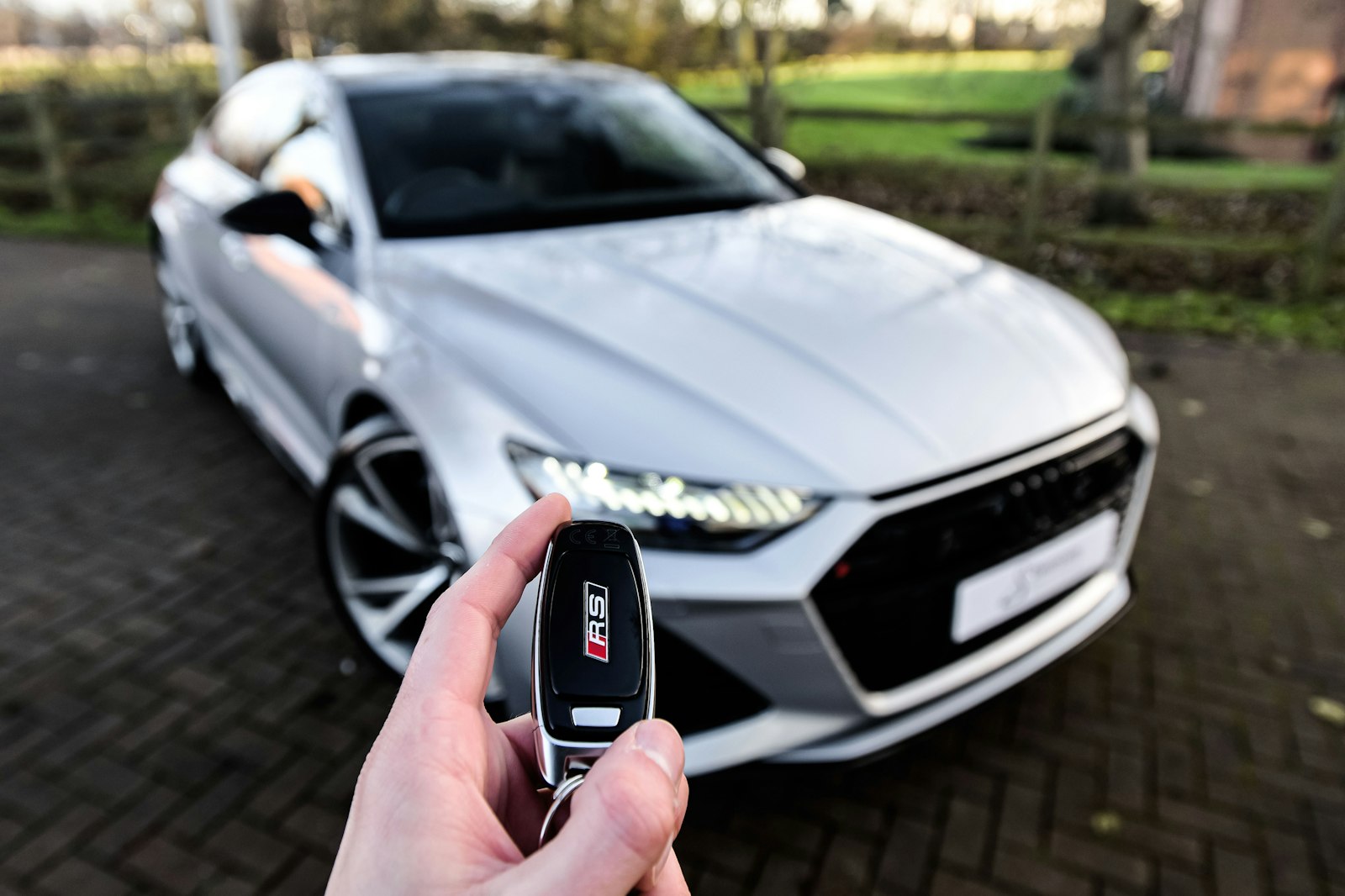
I want to be careful with this one, because the marketing around driver-assist systems is the most irresponsible language in the modern car industry, and people have died believing it. Let me start with the only sentence that matters: no car you can buy today drives itself. Not the one called "Full Self-Driving." Not Autopilot. Not BlueCruise, not Super Cruise, not any of them. Every one of these is a Level 2 driver-assistance system under the SAE definitions, which means the human is driving and is fully responsible at every instant, even when their hands are off the wheel. With that established — and it is the whole ballgame — let's talk honestly about what these systems genuinely do well, where they fail, and how to use the good ones safely.
What they're actually great at
The honest case for these systems is real, and I use them happily. Their sweet spot is steady-state highway driving, and on that one task the best of them are excellent.
The two technologies underneath are adaptive cruise control (ACC), which manages your speed and following distance, and lane centering, which steers to keep you in the middle of a clearly marked lane. Bolt those together with a good driver-monitoring camera and you get the hands-free highway systems — Ford's BlueCruise, GM's Super Cruise, and the lane-keeping side of Tesla's Autopilot. On a well-marked freeway in clear conditions, they reduce the workload of a long drive dramatically. Super Cruise in particular, restricted to its mapped, pre-qualified divided highways, is the most trustworthy of the bunch precisely because it's the most restricted — it refuses to engage where it isn't confident.
The genuine safety wins here are less glamorous than the hands-free party trick:
- Automatic emergency braking has measurably reduced rear-end collisions across the whole fleet, assist-system or not. This is the feature actually saving lives, and it's now standard on nearly everything.
- Adaptive cruise smooths stop-and-go traffic and is genuinely fatigue-reducing on a long slog.
- Lane-keeping catches the drift when your attention lapses for a second — which, on hour four of a drive, it will.
Used as what they are — a competent co-pilot for boring highway miles — these systems make driving safer and less tiring. I'm not anti-ADAS. I'm anti the way it's sold.
Where they quietly fail
The danger isn't that these systems fail loudly. It's that they work beautifully 98% of the time, lull you into trusting them, and then fail suddenly in the 2% — right when you've stopped paying attention. Here's the map of the failure cases I've personally watched happen.
- The stationary object problem. ADAS is tuned to track moving traffic. A stopped object in your lane — a stalled car, a crash, debris, a road-work truck — is exactly the scenario where these systems have historically performed worst, and where several fatal crashes have occurred. The car is great at not rear-ending moving cars and surprisingly bad at not hitting still ones. If there's stopped traffic or a hazard ahead, you brake. Do not wait to see if it will.
- Faded, missing, or confusing lane lines. Lane centering is only as good as the paint. Construction zones with old lines still faintly visible, sun glare at a low angle, rain, snow-covered roads, sharp curves — all of it can cause the system to wander, ping-pong between lines, or hand control back to you abruptly with very little warning.
- Phantom braking. Camera-and-radar systems sometimes slam the brakes for a shadow, an overpass, or a truck in the next lane. It's startling, it's dangerous in traffic, and it's a vivid reminder that the car is pattern-matching, not understanding.
- Cut-ins and merges. A car merging into your lane from the side can confuse the following-distance logic, and the system's reaction is sometimes too slow or too abrupt. Human judgment is still far better at reading a merge.
- Weather. Heavy rain, snow, and fog degrade the cameras and sensors the whole system depends on. Most will warn you they're degraded and disengage — but "most" and "usually" are not words you want governing two tons of car at 70 mph.
The marketing-versus-reality gap
This is where I get frustrated, because the gap between the name and the capability is not an accident. "Full Self-Driving" is a Level 2 system that requires constant supervision and explicitly tells you so in the fine print while the badge on the screen says otherwise. "Autopilot" borrows a word from aviation that the public wildly misunderstands. Even the better-behaved names — "BlueCruise," "Super Cruise," "ProPILOT" — lean on the word "cruise" and "pilot" to imply more autonomy than exists.
The thing the brochures bury: the driver-monitoring system is the most important safety feature in the whole stack, and it exists precisely because the company knows you'll be tempted to stop paying attention. The good systems — Super Cruise and BlueCruise — use an infrared camera that watches your eyes and nags or disengages the moment you look away too long. That eye-tracking is not a nag-feature to be tolerated; it is the safety case. Systems that let you go hands-and-eyes-free for long stretches with weak monitoring are the dangerous ones, regardless of how slick the lane-centering feels. When you're shopping, ask specifically: does it watch my eyes, and what does it do when I stop watching the road?
How to actually use them safely
None of this means avoid these systems. It means use them as the supervised tools they are. My rules, after thousands of miles babysitting every major system on the market:
- Treat hands-free as hands-ready. Even on a system that lets you take your hands off, keep them hovering and your eyes on the road. The hands-off feature is a comfort, not a license to disengage your brain.
- Highway only, good conditions only. These systems earn their keep on divided highways with clear lines in decent weather. The more the environment looks like a city street, a construction zone, or a storm, the more you should switch them off and just drive.
- Pre-brake for stopped objects. If you see anything stationary in your lane ahead, cover the brake and slow down yourself. Never trust the system to catch it.
- Learn your specific car's disengagement behavior. Find out, in safe conditions, exactly how your system hands control back — the sounds, the lights, the seat buzz — so a surprise handoff at speed doesn't catch you cold.
- Never defeat the driver monitor. The wheel-weights and camera-blockers people buy to fool the attention system are removing the one thing standing between a momentary lapse and a crash. Don't.
The most capable driver-assist system on sale today is a very good co-pilot and a very bad chauffeur. Used inside its real limits — clear highway, eyes up, hands ready, brake covered for the unexpected — it makes long drives safer and less exhausting, and I genuinely recommend the well-monitored ones. Used the way the marketing invites you to use it, it's a system that works perfectly right up until the moment it needs you most, when you've already stopped watching. Know which of those two cars you're driving. They're the same car.