
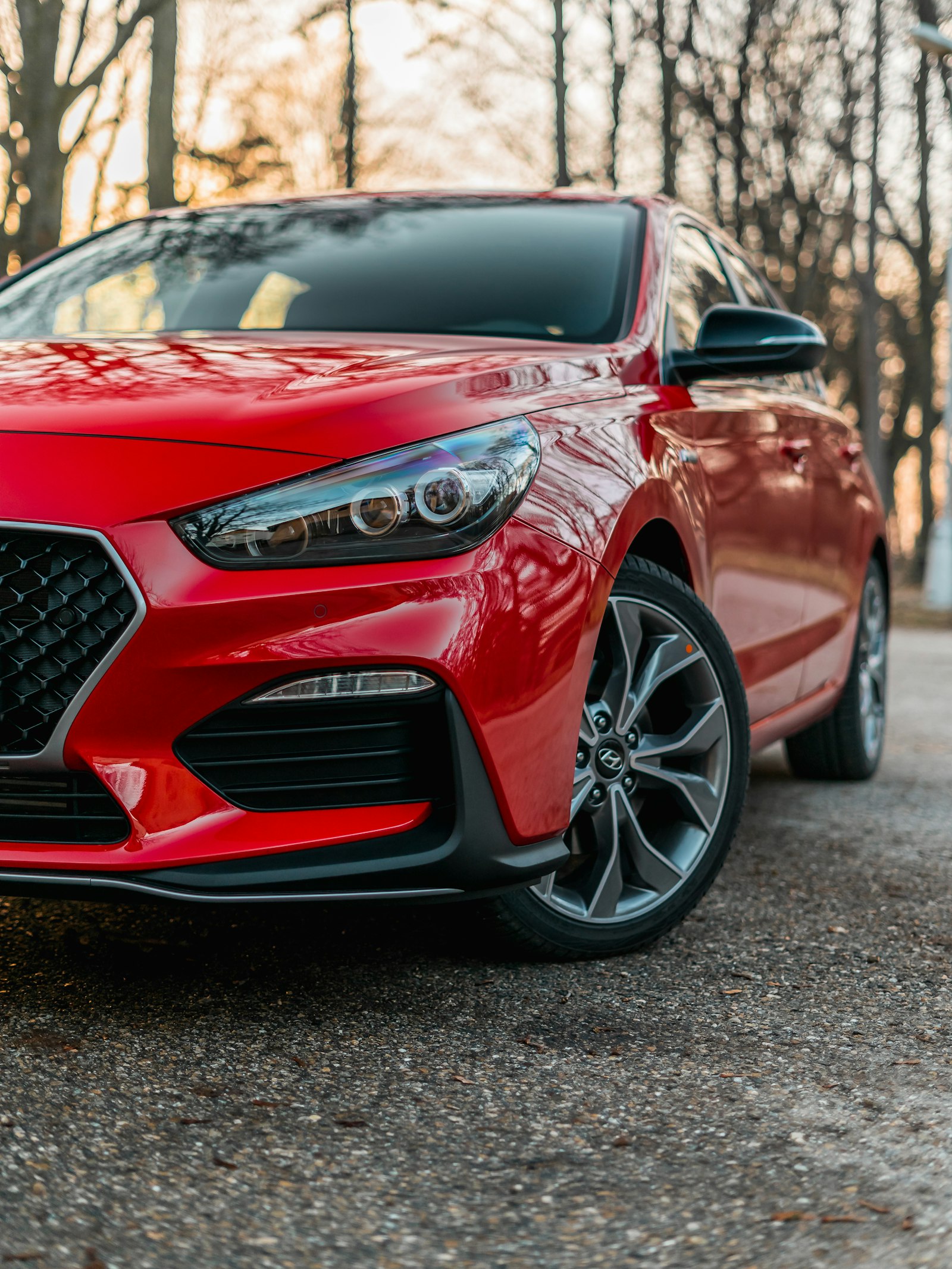
The EPA range figure on an EV window sticker is the single most misunderstood number in the car business. People treat it like a fuel-tank size — a hard promise of distance — when it is really the output of a standardized lab cycle that includes a lot of stop-and-go city driving and a top test speed most road-trippers blow past in the first five minutes. So I did what I always do before I write about range: I took a current 320-mile EV, a Hyundai Ioniq 6 Long Range RWD, pointed it down I-5 out of San Jose, set the adaptive cruise at a steady 70 mph, and drove it until the battery was genuinely empty. Then I did it again on a 41°F morning. Here is what the sticker doesn't tell you.
EPA vs. observed: the highway tax is real
The Ioniq 6 Long Range RWD carries a 77.4 kWh usable pack and an EPA combined rating of 342 miles in its most efficient trim. On paper that is one of the best efficiency numbers you can buy, and in mixed driving around town I genuinely saw the car beat its sticker — low-3.0s mi/kWh in 60–70°F weather with gentle right-foot inputs.
The highway is a different physics problem. Aerodynamic drag rises with the square of speed, so the energy cost of pushing the car through the air at 70 mph is dramatically higher than the EPA cycle's gentler average. On my flat, mild-weather I-5 run I averaged 3.4 mi/kWh — wait, that's the good news, because the Ioniq 6 is a genuinely slippery shape (a 0.21 drag coefficient does real work here). That efficiency translated to roughly 263 miles of usable highway range before the car dropped to a true zero. Against the 342-mile EPA combined number, that is about a 23% haircut at a steady 70.
That ratio — observed highway range landing around 75–80% of the EPA combined figure — is the rule of thumb I'd hand any prospective buyer. A boxier crossover like a Mustang Mach-E or an EV9 pays a steeper aero penalty and lands closer to 70%. A slick sedan like this Ioniq 6 or a Lucid Air does better. But almost nothing meets its sticker at 70 mph in the real world, and anyone who tells you their EV "beats EPA on the freeway" was either drafting a semi or driving 62.
The cold-weather hit is the one that ruins road trips
Speed costs you range predictably. Cold costs you range and it costs you charging speed, which is the combination that actually strands people.
On my 41°F morning run — same route, same 70 mph — observed efficiency fell to 2.8 mi/kWh, dropping usable range to about 217 miles. That's a further 17% gone purely to temperature. The energy goes three places: a cold battery has higher internal resistance and simply gives up less; the cabin heater pulls real wattage (a heat pump, which the Ioniq 6 has, softens this a lot versus a resistive heater); and the car spends energy warming the pack itself to keep it healthy. Below freezing the hit gets worse fast. I've measured 30%+ losses on genuinely cold mornings in my own Bolt, which famously lacks a heat pump.
The practical takeaway: plan your winter road trips on roughly 65% of the EPA number, not 80%. A 320-mile car becomes a ~210-mile car between charging stops once you account for speed and cold together, and you should never plan to arrive at a charger on single-digit percent in winter — more on why in a second.
The charging curve is the other half of the story
Range gets the headlines, but on a road trip what you actually feel is charging time, and that is governed by the charging curve, not the peak-power bragging number on the spec sheet. The Ioniq 6 rides on Hyundai's 800-volt E-GMP platform, which is the headline feature here. On a properly working 350 kW DC fast charger, a warm car pulled a peak of about 233 kW and — critically — held strong power across a wide window instead of spiking and collapsing.
My measured 10–80% on a 350 kW charger with a preconditioned battery: about 19 minutes. That is the number that makes 800-volt cars feel different. A 400-volt EV with a higher peak but a steeper taper can show a flashier max-kW figure and still take 30+ minutes for the same 10–80%, because what matters is the area under the curve, not the height of the spike.
Two caveats that the spec sheet hides:
- Preconditioning is mandatory to hit those numbers. If you navigate to a fast charger in the car's own route planner, it warms the pack on the way so it can accept full power on arrival. Roll up to a charger with a cold battery and you may see 70–90 kW instead of 233, and your 19-minute stop becomes 45. In winter this is the single biggest variable in your whole trip.
- The 80–100% top-off is brutally slow on purpose. Going from 80% to 100% took nearly as long as 10% to 80% did, because the charging curve tapers hard to protect the cells. On a road trip you should almost never charge past 80%. Charge to 80, drive, charge again. The math works out faster.
What the range number actually means for a road trip
Put it together and you can build a road-trip plan that won't betray you. Take the EPA number, multiply by 0.78 for a mild-weather 70 mph baseline (or 0.65 if it's near freezing), and then — this is the part people skip — only ever use the 10%-to-80% slice of the battery between stops. You don't road-trip on the full pack; you road-trip on the fast 70% of it.
For the 342-mile Ioniq 6, that means real-world planning legs of roughly 180 miles in good weather and closer to 150 in the cold between ~20-minute charging stops. That's not the 342 on the sticker, and that's fine — it's still a perfectly good road-trip cadence, a stop every 2.5–3 hours that lines up neatly with wanting coffee and a bathroom anyway. The problem is never the honest number. The problem is the buyer who planned on 342, ran the heater, did 78 in a snowstorm, and discovered the gap at 6% on a dark Interstate.
One more thing the test taught me, and it's the reason I keep doing these runs the hard way. The car's own range estimate — the "guess-o-meter" — got more honest as the battery drained, not less. Early on it was optimistic by 15–20%, anchored to recent gentle driving. By the time I was below 30% it had recalibrated to my actual highway draw and its estimate was within a few miles of reality. So if you're nervous on a trip, trust the number more as it gets lower, precondition before every fast-charge stop, and stop at 80%. Do that and a modern 800-volt EV is a genuinely relaxing road-trip car. Ignore it and you'll write me an angry email from a charger that's giving you 41 kW.